
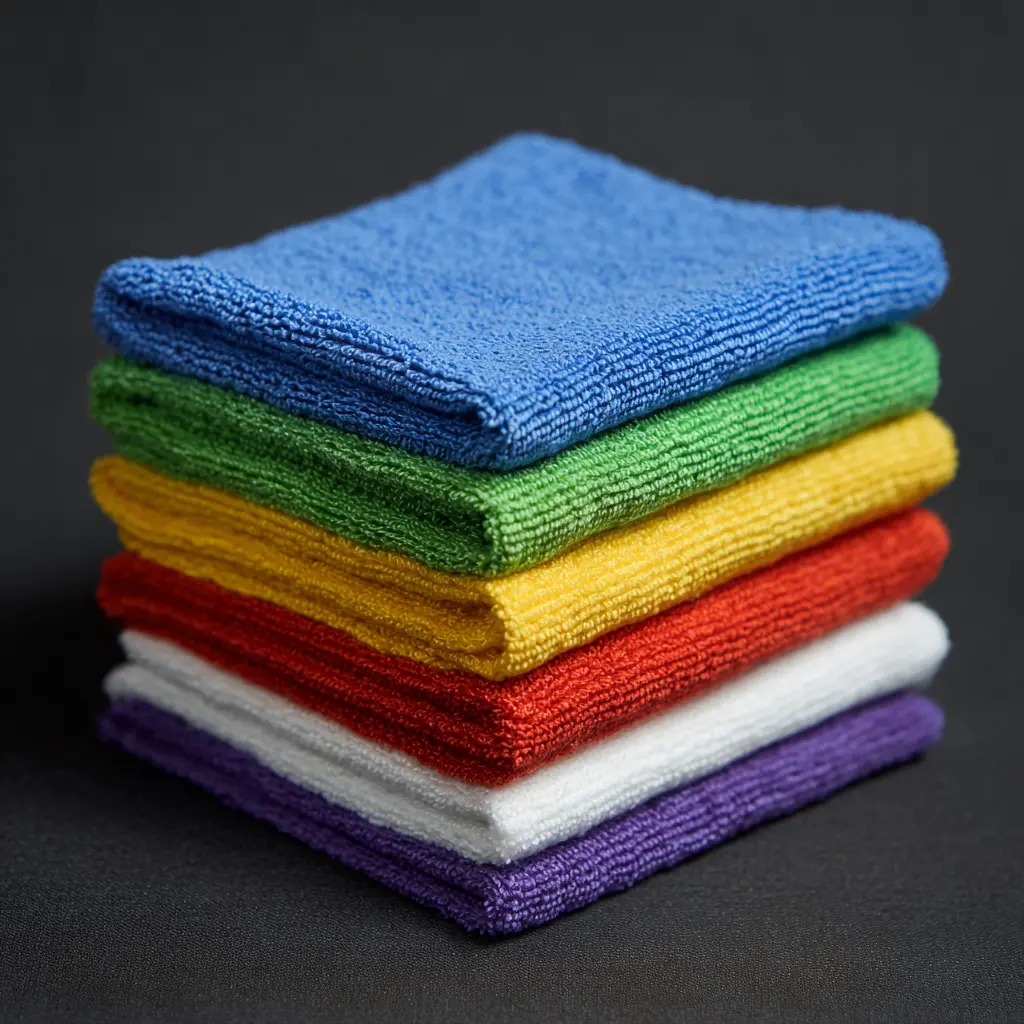
The Complete Microfiber Cloth Guide
 Written by Shannon, Owner and Founder of Long Island Maids
Microfiber cloths are the most important tool in professional cleaning. But not all microfiber is created equal—cheap cloths actually make cleaning harder. Here's everything you need to know about GSM ratings, color coding, proper care, and why investing in quality microfiber pays off.
Why Microfiber Works
According to the EPA's guidance on greener cleaning products, microfiber cloths can reduce cleaning chemical use by up to 90% while improving cleaning effectiveness. But what makes microfiber so effective?
The Science Behind Microfiber
Microfiber is made from synthetic fibers (typically polyester and polyamide/nylon) that are split into microscopic strands—about 1/100th the diameter of a human hair. This creates several cleaning advantages:
- Massive surface area: A single microfiber cloth has millions of tiny fibers that act like hooks, grabbing and trapping dirt, dust, and bacteria
- Electrostatic charge: The synthetic fibers create static electricity that attracts dust particles rather than pushing them around
- Capillary action: The tiny spaces between split fibers pull moisture in, making microfiber incredibly absorbent
- No residue: Unlike cotton, microfiber doesn't leave lint or fibers behind on surfaces
Microfiber vs. Cotton
Traditional cotton cloths and paper towels push dirt around and often require cleaning chemicals to be effective. Here's how microfiber compares:
- Absorption: Microfiber absorbs 7-8 times its weight in liquid; cotton absorbs about 3-4 times
- Cleaning power: Studies show microfiber removes up to 99% of bacteria with water alone; cotton with water removes about 30%
- Lint: Quality microfiber is lint-free; cotton leaves fibers on surfaces
- Durability: Microfiber lasts hundreds of washes; cotton degrades quickly
- Drying speed: Microfiber dries in about half the time of cotton
GSM Ratings Explained
GSM stands for "grams per square meter"—it measures the density and weight of the microfiber. Higher GSM means more fibers packed into the same area, which generally means better cleaning performance and longer lifespan.
| GSM Range | Quality Level | Best Uses | Durability |
|---|---|---|---|
| 200-280 GSM | Economy | Light dusting, disposable tasks, first wipe of very dirty surfaces | 50-100 washes |
| 300-350 GSM | Professional | General cleaning, kitchens, bathrooms, most household tasks | 200-300 washes |
| 400-600 GSM | Premium | Glass, mirrors, stainless steel, polishing, delicate surfaces | 300-500 washes |
| 600+ GSM | Ultra-Premium | Auto detailing, electronics, luxury finishes | 500+ washes |
What GSM Should You Buy?
For most household cleaning, 300-350 GSM is the sweet spot. Here's our recommendation:
- Everyday cleaning: 300-350 GSM general purpose cloths—buy in bulk
- Glass and mirrors: 400+ GSM for streak-free results (see our streak-free mirror guide)
- Dusting: 200-300 GSM is fine for dry dusting
- Kitchen grease: 300+ GSM handles grease better than lower weights
Types of Microfiber Cloths
Different tasks call for different microfiber constructions. Here are the main types you'll encounter:
The workhorse of cleaning cloths. Textured surface with small loops that scrub and absorb. Usually 300-350 GSM.
Best for: Kitchen surfaces, counters, bathrooms, general wiping, appliances
Flat, tight weave with a smooth, suede-like feel. Doesn't leave lint or streaks. Usually 300-400 GSM.
Best for: Glass, mirrors, stainless steel, chrome, TV screens, polishing
Distinctive honeycomb pattern creates pockets that trap dirt and absorb large amounts of water quickly.
Best for: Drying dishes, wiping spills, car drying, windows (as drying cloth)
One side has an abrasive texture (often mesh or heavy loops) for scrubbing, the other side is smooth for wiping.
Best for: Stuck-on food, soap scum, tile grout, stovetops (see our stovetop guide)
Long, fluffy fibers (sometimes called "chenille") that attract and hold dust. Great for blinds and irregular surfaces.
Best for: Dusting furniture, blinds, baseboards, ceiling fans, electronics (see our dust reduction guide)
Color Coding System
Professional cleaners color-code their cloths to prevent cross-contamination. Using a bathroom cloth in the kitchen—even after washing—risks spreading bacteria. Here's the industry-standard system:
Proper Cleaning Technique
Even quality microfiber won't perform well with poor technique. Here's how professional cleaners get the best results:
The Folding Method
Never ball up a microfiber cloth. Fold it into quarters to get 8 clean surfaces from one cloth:
- Lay cloth flat, fold in half
- Fold in half again—you now have a quarter-folded cloth
- Clean with one surface until dirty
- Flip to a fresh surface
- When all 4 surfaces on one side are used, flip the cloth over for 4 more
- Replace with a fresh cloth when all 8 surfaces are dirty
Wet vs. Dry
- Damp cleaning: Slightly damp microfiber cleans better than dry or soaking wet. The moisture helps activate the capillary action.
- Dry dusting: For dusting, use completely dry microfiber. The static charge attracts dust better when dry.
- Never dripping wet: Excess water leaves streaks and reduces cleaning power. Wring thoroughly.
Motion Matters
- Straight lines, not circles: Wipe in straight, overlapping lines. Circular motions spread dirt in circles and can leave swirl marks.
- Work in sections: Clean one area completely before moving to the next.
- Light pressure: Let the microfiber do the work. Heavy pressure compresses the fibers and reduces effectiveness.
Washing & Care
Proper care is what separates microfiber that lasts 500 washes from microfiber that's useless after 50. Here are the rules:
What to Do
- Wash after every use: Dirty microfiber doesn't clean—it just moves dirt around
- Use warm water: Hot water can damage fibers; cold water doesn't clean well
- Use mild detergent: A small amount of fragrance-free, dye-free liquid detergent
- Wash separately: Microfiber attracts lint from cotton and other fabrics
- Use mesh laundry bags: Prevents cloths from picking up lint and protects fibers
- Air dry or low heat: High heat melts synthetic fibers and destroys cleaning ability
What NOT to Do
- Fabric softener: Coats fibers and destroys cleaning ability—this is the #1 microfiber killer
- Dryer sheets: Same problem as fabric softener
- Bleach: Breaks down synthetic fibers
- High heat: Melts fibers (polyester melts at 250°F)
- Ironing: Will melt the cloth instantly
Deep Cleaning Microfiber
If your microfiber cloths have lost their cleaning power but aren't worn out, they may be clogged with residue. Try this reset:
- Soak cloths in warm water with 1 tablespoon of white vinegar per quart for 15-30 minutes
- Rinse thoroughly
- Wash normally with mild detergent
- Air dry or tumble dry on low/no heat
This can restore cloths that have been accidentally washed with fabric softener or have buildup from cleaning products.
When to Replace
Even with proper care, microfiber eventually wears out. Replace cloths when you notice:
- Decreased absorbency (water beads instead of absorbing)
- Visible wear, fraying, or holes
- Lingering odors after washing
- Leaving lint or streaks where they didn't before
- Fibers feel rough or scratchy (they've hardened)
Frequently Asked Questions
What GSM microfiber cloth is best for general cleaning?
For general household cleaning, 300-350 GSM provides the best balance of absorbency, durability, and cleaning power. Lower GSM (200-280) works for light dusting, while higher GSM (400+) is better for polishing and delicate surfaces like glass and stainless steel.
Why can't I use fabric softener on microfiber?
Fabric softener coats microfiber strands with a waxy residue that clogs the microscopic spaces between fibers. This destroys the cloth's ability to trap dirt and absorb liquids—essentially turning an effective cleaning tool into an ineffective smearing tool. The damage is often permanent, though a vinegar soak can sometimes help.
How long do microfiber cloths last?
Quality microfiber cloths (300+ GSM) typically last 200-500 washes when properly cared for. That's 2-5 years of weekly use. Signs it's time to replace: decreased absorbency, visible wear, lingering odors after washing, or the cloth starts leaving lint.
Can I use microfiber on all surfaces?
Microfiber is safe for most surfaces including glass, stainless steel, granite, wood, and tile. However, avoid using on very hot surfaces (can melt the synthetic fibers), fresh paint (can leave marks), and some anti-glare screens (check manufacturer recommendations). Always test in an inconspicuous area when unsure.
What's the difference between split and non-split microfiber?
Split microfiber has fibers that are mechanically split to create microscopic hooks that trap dirt and absorb liquids. Non-split microfiber hasn't undergone this process and cleans poorly—it just pushes dirt around. Always buy split microfiber for cleaning purposes. Test by pouring water on the cloth: if it absorbs immediately, it's split; if water beads up, it's not worth using.
Related Guides
Let Us Bring the Right Tools
We bring professional-grade microfiber, commercial vacuums, and eco-friendly products to every cleaning. You get expert results without buying or maintaining any equipment.
Serving: Great Neck · Manhasset · Garden City · Roslyn and 40+ more · View all areas